My product · Live
AuraPal
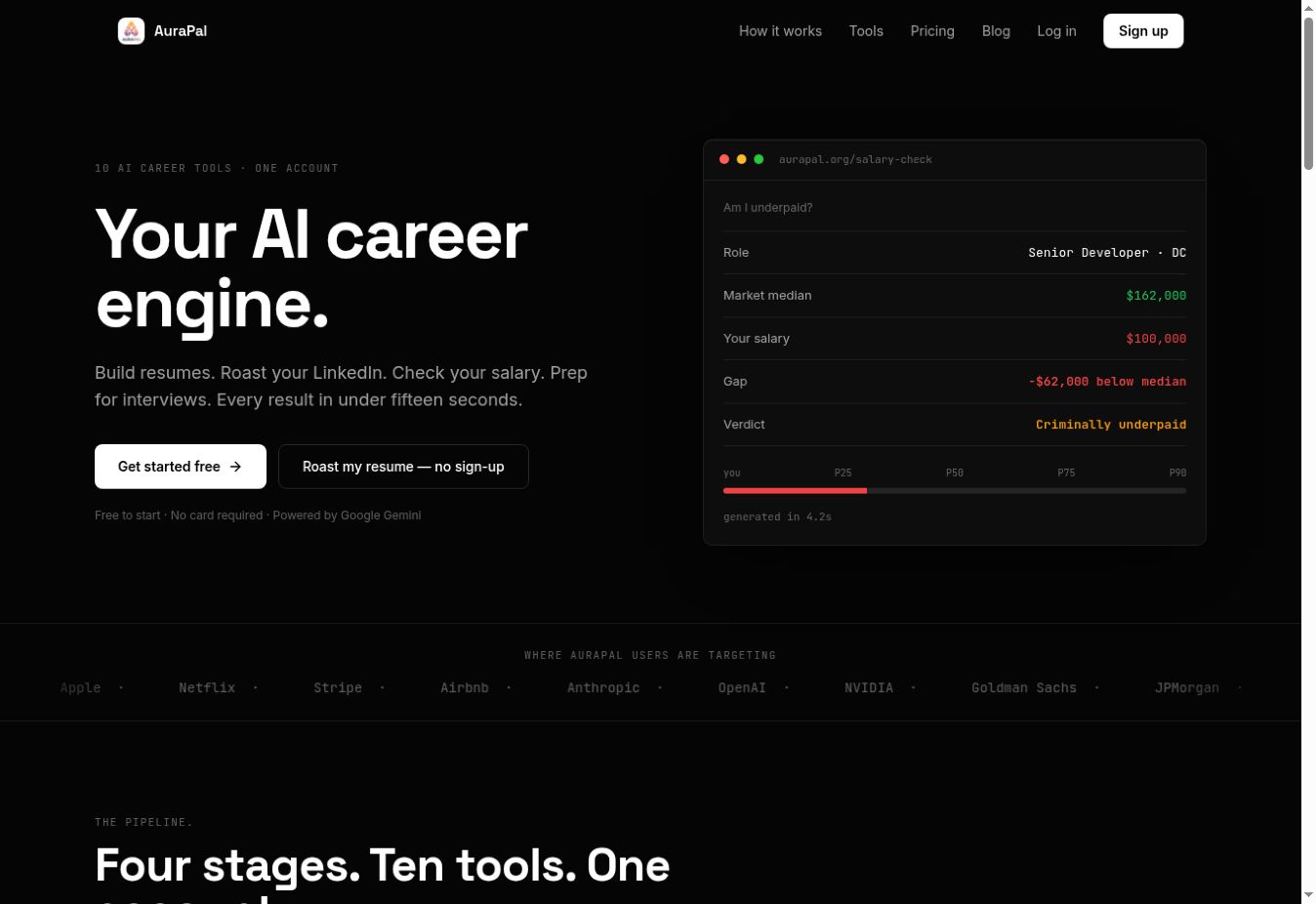
An AI career platform I design, build, and run. From resumes to interview preparation, the focus is turning a complex task into a useful result.
Explore AuraPalAnkit Dongare, AI engineer
I work on LLM inference: GPUs, serving configs, throughput, and price. Here I share comparisons, practical tools, and reproducible studies with the assumptions and inputs behind the numbers.
Choose a model size and weight precision. Compare the three lowest estimated hourly costs, or expand to all seven GPUs.
Capacity estimates, using a 20% runtime allowance and power-of-two GPU counts. Actual fit depends on the model and workload. Method, code, and results.
Prices: getdeploying.com, Nov 9, 2026. Listed on-demand rates; availability and node minimums vary.
Choose a GPU to shortlist open-weight text models for chat, coding, and reasoning.
All 7 examples · NVIDIA H100 · 16-bit estimates
NVIDIA: use a CUDA-compatible serving build and check support for this GPU and checkpoint.
| Model · publisher card | Typical use | Est. memory | GPU count |
|---|---|---|---|
| Qwen3-8B ≈8.2B parameters · Dense | Chat & reasoning | 19.7 GB | 1 GPU Memory candidate |
| Qwen2.5-Coder-32B-Instruct ≈32.5B parameters · Dense | Coding assistants | 78.0 GB | 1 GPU Tight budget |
| Qwen3-32B ≈32.8B parameters · Dense | Chat & reasoning | 78.7 GB | 1 GPU Tight budget |
| Llama-3.3-70B-Instruct ≈70B parameters · Dense | Multilingual chat | 168.0 GB | 4 GPUs Multiple GPUs |
| Qwen3-235B-A22B ≈235B parameters · MoE · total parameters | Chat & reasoning | 564.0 GB | 8 GPUs Multiple GPUs |
| Llama-3.1-405B-Instruct ≈405B parameters · Dense | Large chat model | 972.0 GB | 16 GPUs Multiple GPUs |
| DeepSeek-R1-0528 ≈685B parameters · MoE · stored parametersPublisher checkpoint mixes FP8 and higher-precision tensors; format choices below are memory comparisons. | Advanced reasoning | 1,644.0 GB | 32 GPUs Multiple GPUs |
No single-GPU candidates in this selection. Expand the list to see multi-GPU estimates.
Memory estimates = approximate total parameters × bytes per weight × 1.2, in decimal GB. The 20% allowance is a starting point; context length, KV cache, batching, and runtime allocations change actual fit. Counts round up to power-of-two candidates. Multi-GPU configurations also need supported parallelism and interconnects.
FP8 and INT4 compare memory footprints; they require an appropriate quantized checkpoint and kernels for your hardware. CUDA quantization implementations do not automatically work on AMD. Check the vLLM hardware compatibility table for the exact format and backend.
MoE memory uses all stored parameters, including inactive experts. Model names link to publisher cards with architecture, download access, and license details. DeepSeek's mixed-precision checkpoint can differ from these simplified format estimates. These are inference planning examples; they have not been benchmarked on every GPU.
Catalog reviewed Nov 20, 2026. How the memory estimates work.
Finished work you can read, inspect, and use.
New study · Code + inputs + results
Five model sizes, three weight precisions, seven GPUs. A reproducible worksheet for the capacity question behind every rental decision.
H100, H200, B200, B300, MI300X, MI325X and MI355X compared: memory, bandwidth, GPUs per model, and price. Updated every quarter.
Memory, interconnect, and price compared. What the extra 51 GB buys, why PCIe vs NVLink decides multi-GPU scaling, and what a GPU-hour really costs.
Things I've built and run. More on GitHub.
My product · Live
An AI career platform I design, build, and run. From resumes to interview preparation, the focus is turning a complex task into a useful result.
Explore AuraPal
Client website · Live
A service website for a logistics business, with clear service pages and a direct path from learning about the company to requesting a quote.
A Python workflow connecting source checks, narration, rendering, captions, and publishing.
Python, FFmpeg, Whisper, YouTube Data APIA service and booking website for a local handyman business.
TypeScript · Visit websiteI’m Ankit, an AI engineer based in the Washington, DC area. I started with data analytics and kept following the harder questions until they led to building AI systems full time.
Today I work on the practical side of large language models: how they're served, how fast they run, what they cost, and how configuration choices change all three. At work I benchmark and evaluate an enterprise LLM inference platform, measuring throughput, latency, and cost across models, serving configs, and hardware.
That data background still shapes how I work. I trust measurements over opinions, and if I do something twice, I write a script for it.
Day to day: Python, PyTorch, vLLM, Hugging Face, Docker, and AWS. The full list is on the uses page.

Get new posts by email, or send me a note about a benchmark, a collaboration, or Aurapal.
New studies and write-ups, sent when they're published. Request updates by email, or follow the RSS feed.
Opens your email app with a signup request for you to send.